
Why Does My Dog Pull on Walks? Start With the Reason
Pulling is not one behavior with one cause. Learn how excitement, pace, environment, worry, and reinforcement can all change what happens at the end of the leash.
Read the guide →Adventure Guide topic · 7 guides
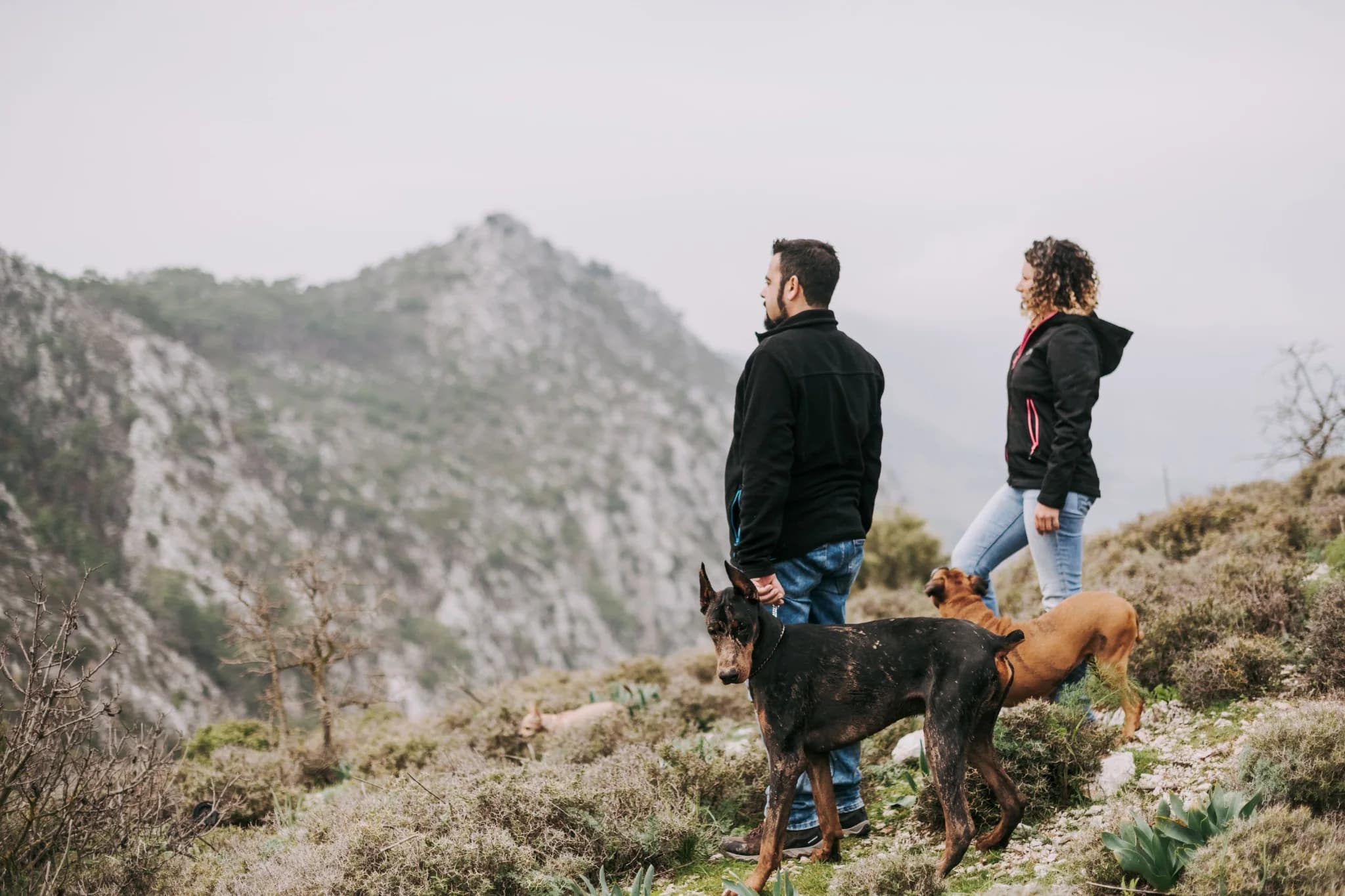
Walking problems rarely have one cause. Start here to look at patterns, environment, confidence, equipment, and training without assuming the leash itself explains everything.
Start here

Pulling is not one behavior with one cause. Learn how excitement, pace, environment, worry, and reinforcement can all change what happens at the end of the leash.
Read the guide →
A walk does not have to be fast to be worthwhile. Sniffing is normal canine behavior and can turn an ordinary route into a richer sensory outing.
Read the guide →
A dog who plants their feet may be sniffing, uncertain, tired, hot, uncomfortable, or in pain. The pattern around the stop helps narrow down what to check next.
Read the guide →Common questions
All Walking & Behavior guides

Harnesses and pulling are often discussed as if the answer were obvious. The useful distinction is between equipment, leverage and learned walking behaviour.
Read the guide →
Both leash positions have a purpose. Compare how they change leash handling, redirection and everyday use.
Read the guide →
Pulling is not one behavior with one cause. Learn how excitement, pace, environment, worry, and reinforcement can all change what happens at the end of the leash.
Read the guide →
A dog who plants their feet may be sniffing, uncertain, tired, hot, uncomfortable, or in pain. The pattern around the stop helps narrow down what to check next.
Read the guide →
Freezing, backing away, hiding, or mouthing at a harness can come from fit, handling, sound, previous discomfort, or learned associations. Start by finding the part your dog is reacting to.
Read the guide →
A walk does not have to be fast to be worthwhile. Sniffing is normal canine behavior and can turn an ordinary route into a richer sensory outing.
Read the guide →
Lagging, repeated stopping, altered gait, heavy panting, and loss of enthusiasm can all be reasons to reassess the walk rather than push through it.
Read the guide →